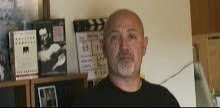
My pop died of emphysema several years ago, and I've always wished I'd had more time to visit with him. He wasn't around much when I was a youngster. My mom always said, "Your daddy worked hard, but he also played hard." And if you'll pardon my language, my dad was a cross between Archie Bunker and Brando's description of his father in Last Tango in Paris: "He was a super masculine, whore fucker, bar fighter."
My dad was from Tennessee. His name was Hugh L., and the L. was only an initial and didn't stand for anything. Having a middle initial as a substitute for an actual name was evidently a custom in the hills of Tennessee where my dad grew up in the 1930's. There is a common joke there that the people are so poor they can't even afford a full name, and could only afford a middle initial. My dad eventually told everyone the L. stood for Larry, just to get them to shut up about it, I guess. Larry is what my mom called him until his dying day.
My dad was a kind, compassionate man, but he had a rough exterior and was an unrepentant womanizer. Growing up in Chicago in the 1960's, on the very few, rare occasions my dad was home and not working or playing, I was actually able to watch TV with my dad. We couldn't watch any comedies. If I turned it to Get Smart or Hogan's Heroes, he'd say, "Get that shit off there." So I'd have to turn it to Gunsmoke, The Rifleman or Wanted Dead or Alive. Testosterone city. Needless to say I was a bit deficient in the sense of humor department as a child and later in life. What my Dad did like was: he liked beer, he liked women, he liked baseball and he liked country food; food like biscuits and gravy, and wilted mustard greens soaked in bacon bits and hot grease. Cracklings, even, whatever the heck that is. And he liked a good western, too.
The only time he really busted my ass when I was a kid was when I took too long to water the pigs during the heat of the day in the burning hell of a Texas summer, and when I went swimming in a stock tank without permission near a place called Hippie Ridge in Wise County, Texas. But he was always busting my balls about something later in life, in my early twenties especially, when I was a shiftless, lazy, college dropout, Rimbaud wannabe. But, short story long, when I knew the old fucker only had a few years left to live, I loaded the car up with VHS movie cassettes and drove up to Roane County, Tennessee to see him. I tried to take a variety of movies for him to see. Some movies I took I knew he would like, like the Clint Eastwood western, The Unforgiven. (I always get choked up at the end when those prostitutes come out in the rain to see Clint Eastwood ride out of town.) And some movies I took just to mess with his head, like Twin Peaks: Fire Walk with Me. When the little dwarf in the red room sucks up the corn from a silver spoon in an extreme closeup while the soundtrack plays in reverse, that's about the time my dad said, "Sheeeit, son, get that shit off there." Leave it to David Lynch to blow my dad's mind. That's about the time I hit the eject button and I popped in Hud.
I knew my dad would probably get a stiffy watching Hud, because he was Hud, in so many ways. Ruggedly handsome like Newman, with chiseled features and a confident swagger. I never once heard my dad laugh in his life... seriously... never! I heard him chuckle once or twice, either watching a John Wayne movie or some other western movie that had a brief moment of comedy between scenes of killing dark-skinned people. But, by golly, he sure liked watching Hud! Hud, the drunken, womanizing cowboy. He came pretty darn close to laughing a time or two, especially when Hud was extricating himself from the clutches of a jealous husband. My dad told me of a few such close calls in his life. When my dad was sober he wouldn't have two words to say, but when he was drinking, he was a hillbilly raconteur who would get on a drunken binge and couldn't shut up. I'll withhold some of the scandalous details since there might be women and children about. I think you get the picture.
Hud was adapted from the Larry McMurtry novel, Horseman, Pass By. Hud's younger brother is played by Brandon de Wilde, the kid from Shane as a young man. Larry McMurtry is a life long native of the Wichita Falls area, where my mom and dad and our family lived a time or two. There are some good chapters on the making of Hud in Larry McMurty's book, In a Narrow Grave: Essays on Texas. Released in 1962, Hud is a great movie and a great nostalgia trip for anyone who grew up in Texas. Academy awards went to Patricia Neal and Melvyn Douglas, and to James Wong Howe for his brilliant cinematography.
I was glad my dad and I got the chance to watch Hud together one of the last times I saw him. It was one of the very few times we ever bonded, as they say. If you could call it that. That's when my dad told me that I was named after a character from the Zane Grey western novel, The Lone Star Ranger, and General Leslie Groves of the Manhattan Project. My mom, who eventually divorced him, had always told me I was named after some of my dad's Air Force buddies. I know my dad wasn't much of a role model, but he was my dad. We don't get to pick them. It's like the genetic lottery. I guess I could have done a lot worse. He was a good man most of the time, except when it came to married women and booze. He never was there for me as a kid, but he always put food on the table. Now I suppose he's up on that great big barstool in the sky.
Showing posts with label Texas movies. Show all posts
Showing posts with label Texas movies. Show all posts
Friday, June 18, 2010
Saturday, February 6, 2010
Blind Pigs and the Paris, Texas Criterion Collection
I have been asked to write a script for a new film project. A new acquaintance, who is a cinematographer and fellow collaborator on the new project, recommended that I watch the Wim Wender’s Cannes Film Festival Palme d’Or winner, Paris, Texas. He recommended that I watch it for inspiration, I suppose, before attempting to write the new script; as Wim Wenders is one of his favorite directors. As fate would have it, the Criterion Collection of Paris, Texas was due for release on January 26, 2010.
I had watched Paris, Texas years ago but basically had no recollection of it, due to the fact it was 1984 when it was released, and also due to the fact that was too many “inebriated” years ago. I just remember Harry Dean Stanton wandering in the desert, and I believe I tuned out after that. I had never watched a Wim Wenders movie, and being a college dropout and autodidact, I was not well versed in foreign films or movies in general. For years in the Seventies and early Eighties I avoided television like the plague, and found very little time for movies. To this day I’ve never seen an episode of the television show, Dallas, and many other hit shows of that era. I have blank spaces like an amnesiac for whole swatches of that era. I had always fancied myself a poet, which was probably a bit of a stretch, since teenage doggerel and mind-altered verse does not necessarily amount to poetry. So this is not so much a review of the movie Paris, Texas (I’m not worthy) as it is the ramblings of a film auteur wannabe.
One pleasant surprise I discovered was that the screenplay for Paris, Texas was written by Sam Shepard, the Pulitzer Prize-winning playwright whose play Tooth of Crime inspired me to become a playwright and write my first play, Warboots. (Warboots received a somewhat nice review by critic Lawson Taitte of The Dallas Morning News when it premiered on the stage in Deep Ellum in 1993.) Paris, Texas is based loosely on Shepard’s book, Motel Chronicles. The screenplay was adapted further by Dallas screenwriter, L.M. “Kit” Carson. Carson’s son by actress Karen Black, Hunter Carson, plays the son named Hunter in the film, and did a superb job. (I’ve always loved Karen Black, especially in Day of the Locusts and Easy Rider.) I was surprised when I looked up Hunter Carson’s name on IMDb to discover that he has done very little acting since. He was very good in Paris, Texas as the young boy abandoned by his parents and left to be raised by relatives.
I must admit that while watching the Criterion Collection of Paris, Texas I kept waiting for something to happen. I like movies where something happens. I like movies with a linear plot and sequence of events that keep me interested. I was left thinking, maybe something is happening and I’m just not an astute enough observer to “see” it. I must confess, I just don’t get most “European” movies. They’re way too subtle for my tastes. The three “foreign” movies I can say I did like are Bertolucci’s Last Tango in Paris, Costa Gavras’ Z and the Chinese erotic movie, Sex and Zen. There are a few others, but I won’t bother listing them all.
The movie obviously deals with mental illness. Travis, Harry Dean Stanton’s character, is obviously mentally ill, probably paranoid schizophrenic. Why else would he be walking through the desert, mute and detached from reality? It would take more than just a broken heart to compel such wandering for four years. (I knew a guy like that who used to walk all the time on the highway. He never wore socks and wore big, thick boots. He wasn’t schizophrenic, but he had a slight speech impediment and it was rumored that he had dropped too much acid in the Sixties and Seventies. He told me he once saw ZZ Top when they were a garage band in Ft. Worth. He had a lot of old war stories from growing up in Ft. Worth in the Fifties and Sixties. He was actually a nice guy, just misunderstood and the object of much bullying.) One of my favorite scenes of the movie is the mentally ill guy screaming a monologue of apocalyptic content on the highway overpass as rush hour traffic rushes by below. I thought that was pretty brilliant to have that turn up out of nowhere. I’ve been around a lot of mentally ill people, and that scene was spot on.
I finally “got” Paris, Texas after watching all the extras and listening to the director’s commentary by Wim Wenders. That’s when I discovered that the movie was for the most part made up as they went along, a pastiche of scenes stuck together like a celluloid poem, a “poetic” movie if you will. I guess the film purists “got it” all along, or were satisfied if they didn’t “get it” right away. I’m afraid my attention span isn’t the best for European movies or sentiments.
My heartstrings were touched the most when French actress Aurore Clement, who plays Hunter’s aunt Anne, pleads on the phone for Hunter to come home. That was a sad and touching moment. (Aurore Clement is stunningly beautiful, especially in the French plantation scene in Apocalypse Now Redux.) Dean Stockwell is also great as Walt, the brother of the wandering Travis, and the beautiful Nastassja Kinski did a great job with her Southern accent and portraying Jane, the long lost mother eventually found working in a peep show in Houston. The movie actually didn’t have an ending until Sam Shepard dictated the ending over the phone to Wenders, because by that time Sam Shepard had other obligations as an actor on another movie set, and fax machines did not yet exist.
Robby Muller’s cinematography is superb. I loved the big, blue skies of Texas and the Southwest, the clouds, the trains, the colors, and the grandeur of the opening scenes in the desert area around Big Bend National Park, near Terlingua, Texas. Equally unique and nostalgic are the many shots of motels, stores and cafes (inevitable I suppose in any “road movie”), which Wim Wenders mentions in the commentary as being homage to the photography of Walker Evans.
The Criterion Collection also has great extras other than the director’s commentary: an interview of Wenders by German journalist, Roger Willemsen; excerpts from a 1990 documentary on Wenders featuring interviews with Wenders, Robby Muller, composer Ry Cooder, Harry Dean Stanton, Dennis Hopper, Peter Falk, Hans Zischler, novelist Patricia Highsmith and director Samuel Fuller. It also has new video interviews with filmmakers Allison Anders, who was a young production assistant on the movie, and Claire Denis, who was assistant director.
The Criterion Collection has many other extras too numerous to list here. The film did provide much inspiration, but most of the inspiration came from watching the extras. Just getting the opportunity to listen to the director’s commentary alone was worth the price paid for the DVD. It was very interesting to learn about the many struggles of Wim Wenders to see the movie to completion, such as stealing shots on the Houston freeways, coming up with an ending midway through the film when there wasn’t a complete screenplay, and searching for some sort of central vision from a potpourri of ideas which weren’t totally worked out before filming began. Those are trying circumstances for any filmmaker. There is an old Russian saying, “Even a blind pig finds an acorn every once in a while.” Congratulations to Wim Wenders for his steadfastness in seeing his incomplete vision to the end, for winning the Palme d’Or and for making a beautiful, poetic movie in the process.
I had watched Paris, Texas years ago but basically had no recollection of it, due to the fact it was 1984 when it was released, and also due to the fact that was too many “inebriated” years ago. I just remember Harry Dean Stanton wandering in the desert, and I believe I tuned out after that. I had never watched a Wim Wenders movie, and being a college dropout and autodidact, I was not well versed in foreign films or movies in general. For years in the Seventies and early Eighties I avoided television like the plague, and found very little time for movies. To this day I’ve never seen an episode of the television show, Dallas, and many other hit shows of that era. I have blank spaces like an amnesiac for whole swatches of that era. I had always fancied myself a poet, which was probably a bit of a stretch, since teenage doggerel and mind-altered verse does not necessarily amount to poetry. So this is not so much a review of the movie Paris, Texas (I’m not worthy) as it is the ramblings of a film auteur wannabe.
One pleasant surprise I discovered was that the screenplay for Paris, Texas was written by Sam Shepard, the Pulitzer Prize-winning playwright whose play Tooth of Crime inspired me to become a playwright and write my first play, Warboots. (Warboots received a somewhat nice review by critic Lawson Taitte of The Dallas Morning News when it premiered on the stage in Deep Ellum in 1993.) Paris, Texas is based loosely on Shepard’s book, Motel Chronicles. The screenplay was adapted further by Dallas screenwriter, L.M. “Kit” Carson. Carson’s son by actress Karen Black, Hunter Carson, plays the son named Hunter in the film, and did a superb job. (I’ve always loved Karen Black, especially in Day of the Locusts and Easy Rider.) I was surprised when I looked up Hunter Carson’s name on IMDb to discover that he has done very little acting since. He was very good in Paris, Texas as the young boy abandoned by his parents and left to be raised by relatives.
I must admit that while watching the Criterion Collection of Paris, Texas I kept waiting for something to happen. I like movies where something happens. I like movies with a linear plot and sequence of events that keep me interested. I was left thinking, maybe something is happening and I’m just not an astute enough observer to “see” it. I must confess, I just don’t get most “European” movies. They’re way too subtle for my tastes. The three “foreign” movies I can say I did like are Bertolucci’s Last Tango in Paris, Costa Gavras’ Z and the Chinese erotic movie, Sex and Zen. There are a few others, but I won’t bother listing them all.
The movie obviously deals with mental illness. Travis, Harry Dean Stanton’s character, is obviously mentally ill, probably paranoid schizophrenic. Why else would he be walking through the desert, mute and detached from reality? It would take more than just a broken heart to compel such wandering for four years. (I knew a guy like that who used to walk all the time on the highway. He never wore socks and wore big, thick boots. He wasn’t schizophrenic, but he had a slight speech impediment and it was rumored that he had dropped too much acid in the Sixties and Seventies. He told me he once saw ZZ Top when they were a garage band in Ft. Worth. He had a lot of old war stories from growing up in Ft. Worth in the Fifties and Sixties. He was actually a nice guy, just misunderstood and the object of much bullying.) One of my favorite scenes of the movie is the mentally ill guy screaming a monologue of apocalyptic content on the highway overpass as rush hour traffic rushes by below. I thought that was pretty brilliant to have that turn up out of nowhere. I’ve been around a lot of mentally ill people, and that scene was spot on.
I finally “got” Paris, Texas after watching all the extras and listening to the director’s commentary by Wim Wenders. That’s when I discovered that the movie was for the most part made up as they went along, a pastiche of scenes stuck together like a celluloid poem, a “poetic” movie if you will. I guess the film purists “got it” all along, or were satisfied if they didn’t “get it” right away. I’m afraid my attention span isn’t the best for European movies or sentiments.
My heartstrings were touched the most when French actress Aurore Clement, who plays Hunter’s aunt Anne, pleads on the phone for Hunter to come home. That was a sad and touching moment. (Aurore Clement is stunningly beautiful, especially in the French plantation scene in Apocalypse Now Redux.) Dean Stockwell is also great as Walt, the brother of the wandering Travis, and the beautiful Nastassja Kinski did a great job with her Southern accent and portraying Jane, the long lost mother eventually found working in a peep show in Houston. The movie actually didn’t have an ending until Sam Shepard dictated the ending over the phone to Wenders, because by that time Sam Shepard had other obligations as an actor on another movie set, and fax machines did not yet exist.
Robby Muller’s cinematography is superb. I loved the big, blue skies of Texas and the Southwest, the clouds, the trains, the colors, and the grandeur of the opening scenes in the desert area around Big Bend National Park, near Terlingua, Texas. Equally unique and nostalgic are the many shots of motels, stores and cafes (inevitable I suppose in any “road movie”), which Wim Wenders mentions in the commentary as being homage to the photography of Walker Evans.
The Criterion Collection also has great extras other than the director’s commentary: an interview of Wenders by German journalist, Roger Willemsen; excerpts from a 1990 documentary on Wenders featuring interviews with Wenders, Robby Muller, composer Ry Cooder, Harry Dean Stanton, Dennis Hopper, Peter Falk, Hans Zischler, novelist Patricia Highsmith and director Samuel Fuller. It also has new video interviews with filmmakers Allison Anders, who was a young production assistant on the movie, and Claire Denis, who was assistant director.
The Criterion Collection has many other extras too numerous to list here. The film did provide much inspiration, but most of the inspiration came from watching the extras. Just getting the opportunity to listen to the director’s commentary alone was worth the price paid for the DVD. It was very interesting to learn about the many struggles of Wim Wenders to see the movie to completion, such as stealing shots on the Houston freeways, coming up with an ending midway through the film when there wasn’t a complete screenplay, and searching for some sort of central vision from a potpourri of ideas which weren’t totally worked out before filming began. Those are trying circumstances for any filmmaker. There is an old Russian saying, “Even a blind pig finds an acorn every once in a while.” Congratulations to Wim Wenders for his steadfastness in seeing his incomplete vision to the end, for winning the Palme d’Or and for making a beautiful, poetic movie in the process.
Saturday, February 21, 2009
Blaine and Sophie in the Woods
Blaine and Sophie trudge through the woods in a scene from Having My Baby from Dilligaf Productions.
 Labels:
Dilligaf Productions,
independent film,
Texas movies
Labels:
Dilligaf Productions,
independent film,
Texas movies
Tuesday, September 9, 2008
Dispatch from Les #4 - Do You Want Some Cheese With That Whine?
I'm not complaining, folks. I set myself up for the struggle. I wanted this punishment. I don't want this blog to sound bitter. I'm excited! I feel like the coolest mofo in town. I just don't want to count my chickens before they cross the road, if you know what I mean. (You know why the chicken crossed the road, don't you? To see a man lay bricks.)
One great bit of fortune here at Dilligaf Productions is that we got so lucky casting Having My Baby. There are a lot of talented actors working and auditioning in Dallas, and we were lucky to get so many. Such kind, gracious, wonderful people. Beautiful people. I am deeply indebted to and very proud of all the actors involved in making Having My Baby a reality.
To those of you who got there late for the pizza, I'm sorry. To the actor left bleeding in the creek without a Band-Aid, I'm sorry. To the dear friend with the twisted ankle, I'm sorry. To the set designer with the hijacked back yard, I'm sorry. To all the numerous people who got poison ivy, I'm sorry. To the actor who had to blow into a breathalyzer to operate the vehicle as she drove and said her lines, because that was the only car we could get for that scene, I'm sorry. To the actor who got anthrax in the mail, I'm sorry. (Just kidding.) And to the actor who was persecuted by The Man, I'm sorry. To all the actors who tired of chips and sandwiches (and Wheat Thins, granola bars, cheese sticks and Fruit Rollups), I'm so very sorry.
To the actors who worked for points... thank you. Don't count them out yet in this economy. I just know we're going to be a big hit in Borneo. To the actors who worked for money... thank you. You were worth every penny and more. I'm just sorry I didn't have more. And to those of you who felt cheated, I'm sorry. And to those of you who donated your time, your resources and your money, a great big thank you. You shall forever be in the pantheon of the people I hold dear. And to my evanescent crew of misfits (a term of endearment to me), I thank you. You too shall get credit when the credits roll.
At the risk of sounding megalomaniacal, I really think we have accomplished something huge in the annals of low-budget indies. Our chances of a cult favorite are a million to one, but I'll gladly take those odds. Better odds than the lottery, mon ami. One thing that can be said of Having My Baby, is that the script has universal appeal. The logline can be understood in any language. Yes, even in the jungles of Borneo, they would understand the storyline of Having My Baby. You think I jest.
New York Times movie critic Matt Zoller Seitz called Having My Baby "a classic" after reading the spec script. Having My Baby poured out of me over a few weekends, as if my muse had turned on a faucet. When I passed around the spec script to an assortment of people, most women who had read it told me it made them cry. When big, burly, scarred roughnecks read it and said they got choked up, I knew I had something. I'm talking about guys who can crack a walnut in the fold of their arm, crying like babies. Guys big enough to eat apples off your head, fighting tears. And Having My Baby never slows down long enough for you to get bored. You won't even have time to notice that tripod leg in the frame. (Just kidding!)
A weird twist of fate has willed this movie into being, like memes taking over time and space and nourishing an anemic little movie into an organic dreamscape worthy of the movie gods. Egads, I sound a bit full of myself as I mix my metaphors. No Hegelian dialectics here, friend, just pure poetry of a movie; beautiful actors, beautiful Texas exteriors, southern style, abortion agonized, religion tinged, testosterone and pheremone fueled, action drama, baby! Get the popcorn ready, Mabel.
One great bit of fortune here at Dilligaf Productions is that we got so lucky casting Having My Baby. There are a lot of talented actors working and auditioning in Dallas, and we were lucky to get so many. Such kind, gracious, wonderful people. Beautiful people. I am deeply indebted to and very proud of all the actors involved in making Having My Baby a reality.
To those of you who got there late for the pizza, I'm sorry. To the actor left bleeding in the creek without a Band-Aid, I'm sorry. To the dear friend with the twisted ankle, I'm sorry. To the set designer with the hijacked back yard, I'm sorry. To all the numerous people who got poison ivy, I'm sorry. To the actor who had to blow into a breathalyzer to operate the vehicle as she drove and said her lines, because that was the only car we could get for that scene, I'm sorry. To the actor who got anthrax in the mail, I'm sorry. (Just kidding.) And to the actor who was persecuted by The Man, I'm sorry. To all the actors who tired of chips and sandwiches (and Wheat Thins, granola bars, cheese sticks and Fruit Rollups), I'm so very sorry.
To the actors who worked for points... thank you. Don't count them out yet in this economy. I just know we're going to be a big hit in Borneo. To the actors who worked for money... thank you. You were worth every penny and more. I'm just sorry I didn't have more. And to those of you who felt cheated, I'm sorry. And to those of you who donated your time, your resources and your money, a great big thank you. You shall forever be in the pantheon of the people I hold dear. And to my evanescent crew of misfits (a term of endearment to me), I thank you. You too shall get credit when the credits roll.
At the risk of sounding megalomaniacal, I really think we have accomplished something huge in the annals of low-budget indies. Our chances of a cult favorite are a million to one, but I'll gladly take those odds. Better odds than the lottery, mon ami. One thing that can be said of Having My Baby, is that the script has universal appeal. The logline can be understood in any language. Yes, even in the jungles of Borneo, they would understand the storyline of Having My Baby. You think I jest.
New York Times movie critic Matt Zoller Seitz called Having My Baby "a classic" after reading the spec script. Having My Baby poured out of me over a few weekends, as if my muse had turned on a faucet. When I passed around the spec script to an assortment of people, most women who had read it told me it made them cry. When big, burly, scarred roughnecks read it and said they got choked up, I knew I had something. I'm talking about guys who can crack a walnut in the fold of their arm, crying like babies. Guys big enough to eat apples off your head, fighting tears. And Having My Baby never slows down long enough for you to get bored. You won't even have time to notice that tripod leg in the frame. (Just kidding!)
A weird twist of fate has willed this movie into being, like memes taking over time and space and nourishing an anemic little movie into an organic dreamscape worthy of the movie gods. Egads, I sound a bit full of myself as I mix my metaphors. No Hegelian dialectics here, friend, just pure poetry of a movie; beautiful actors, beautiful Texas exteriors, southern style, abortion agonized, religion tinged, testosterone and pheremone fueled, action drama, baby! Get the popcorn ready, Mabel.
Friday, September 5, 2008
Dispatch from Les #3: Guerrilla Filmmaking, or, Flying By the Seat of My Pants
It is not illegal, it is not unethical, but it is rude, insinuating yourself into a pubic setting with a few actors and a cameraman. Stealing a shot. Tell the waiter it’s a home movie. Have the actor look into the camera and say, “Hi, Grandma!” as you order your meals. Do what you have to do, but get the shot. Just don’t let the owner or his lawyer know about it. Insurance, don’t you know. Get the shot, then let them run you off. How much embarrassment can you endure to make your film? How badly do you want it?
Guerrilla filmmaking is easier in Texas, and particularly in Dallas, where one doesn’t need a permit to film. That’s right, folks, unless the law has changed in the last ten years since I researched it. As long as you don’t obstruct traffic or disturb the peace, you may film away, my friend, until someone runs you off, or until you get the shot (or get shot). Yes, I know, it’s bold, it’s rude, it’s careless, and it’s idiotic. How badly do you want it?
I let everyone on my films know from the get go that a lot of the filming will be “guerrilla filmmaking,” and “we might run out of money on day ten of shooting.” Those are my exact words when recruiting a production team for a film, or soliciting an actor. Can you believe in a project that much, knowing that all could be for naught if you run out of money midway? That you might actually fail? That you’re actually meant to fail, because you are attempting an impossible feat? And we’re not talking about a short film… we’re talking about an original, feature-length, action-drama, soap operatic, ultra, ultra, microscopically low budgeted independent film shot on mini-DV and edited at home on a personal computer. Some people can’t understand that concept… you’re going to do what? Shoot a feature-length, action drama with no budget to speak of? $25,000? Ha! “Ain’t gonna happen, homeboy,” they’ll tell you…. Watch me! Watch my smoke! How badly do you want it?
I ask people to work for points, which I guess these days is a rather desperate, rude and presumptive method of making a movie, a definite faux pas. I had an actor tell me recently, “The days of working for points are over, Les.” I had a lawyer tell me once, “People with no money shouldn’t make movies,” as he lead me out of his office, in a poor display of hiding his disgust. Can you handle it? How badly do you want to make that low-budget film?
As a producer, I once had a director and a 2nd DP refuse to work on day three of shooting, go behind my back telling tales to my executive producer, and force me to cut another deal, and take financial control of my movie. They stole control of my movie right out from under me! They said I “wasn’t prepared” and I was “intimidating.” The day they said I wasn’t prepared, I got them onto Love Field without a permit or security clearance of any kind, I got them a stretch limousine, and access to an airplane hangar and a Lear Jet. They were two hours late that day and it took them three hours to start shooting. I was waiting for five hours! And all they had to shoot was a couple exiting a Lear Jet and a half a page of dialogue! David and Phil could have shot it in 30 minutes, and I could have GTFO and had extra time to prepare for the rest of the day’s filming at the next location where I was desperately needed. This same director and 2nd DP had some kind of magical jib that was going to supposedly make up for their inadequacies and lack of talent. Five hours I was waiting! Oh, and my other great sin as line producer was that I didn’t have a pair of binoculars for a particular scene. I don’t know about you, but if I don’t have a prop that I’m supposed to have, and I’m directing a movie, I’m going to call the line producer and say, “Hey, numb nuts, where’s the @#%&*% binoculars?” I’m not going to take over the producer's movie. But of course, they thought they were saving my movie from my arrogant, hillbilly self. The only positive thing to come out of that experience, was that they got the shot. (Or some of the shots, anyway, half-assed as they might be.) How badly do you want it?
Some people, actors and crew, begin to think the movie is about them instead of the characters. One of the hazards of guerrilla filmmaking: hiring the occasional non-professional (on a non-professional movie, of course), wannabes and amateurs. Some think, “Woo-hoo, I’m in a movie!” or, “I’m working on a movie!” They begin to think that they are the center of the maelstrom that is independent moviemaking. They begin to think that they are the “bee’s nut,” as Hunter S. Thompson would say. They begin to think the movie is about them and their personal life!
Whenever one says, “I’m making a movie,” those are magical words. People’s ears prick up. All of a sudden you become someone important, someone special, a cut above the rest. It has an effect on people. Then the first few days of shooting, you’re all one big, happy family and everyone is so excited… until, say for instance, the actor falls in love with the actress and they begin fighting, or the script supervisor runs off with the DP, or the grip refuses to work with the director, or the prima donna refuses to say the line correctly, because “it’s stupid”…. Welcome to the low-budget producer’s nightmare. Then all of a sudden new priorities other than the movie begin to become manifest, and your movie takes a backseat to bickering, fighting, hurt feelings, miscommunications, vindictiveness, vendettas, musical bed hopping and general disorder. How badly do you want it?
Or the sycophant who wants you to produce his movie, shoot his movie, cast his movie, use your equipment for his movie, because, if a hillbilly like you can do it, why, obviously anyone can! And of course his script is just the greatest thing and is going to set the screenwriter’s world on fire! And of course, you must do it now! He just needs to be discovered, and you’re his ticket to fame! And if your actions don’t live up to his presumed omnipotence and rise to glory, then look out! You better watch your back, my friend, as you shuffle home beaten and exhausted to your baloney sandwich and your Ramen noodles. (As Colonel Trautman said of Rambo's survival skills: “He can eat things that would make a billy goat puke.”) And then sometime around midnight, when you’re so tired your knuckles are dragging the ground, you take the time to charge the camera batteries, unload and take inventory of your props and equipment, and then take all of your change you’ve been collecting in the coffee can in your closet for months to redeem at a Coinstar, so you’ll have production funds for the next day’s shoot that starts at 9 AM, knowing you’ll really need that money for gas and lunch Monday when you go back to your job in the real world. How badly do you want it?
Quentin Tarantino once said, “He with the most point of view, wins.” How much point of view do you have? How much do you believe in yourself and your perceptions of reality? Webster’s defines reality as, “That which exists independent of perception.” How much of your talent is reality, and how much is pure, subjective, solipsistic ego? How much do you believe in your own talent? Just how driven are you to create your art? Just how many push-ups can you do? Just how badly do you want it?
Guerrilla filmmaking is easier in Texas, and particularly in Dallas, where one doesn’t need a permit to film. That’s right, folks, unless the law has changed in the last ten years since I researched it. As long as you don’t obstruct traffic or disturb the peace, you may film away, my friend, until someone runs you off, or until you get the shot (or get shot). Yes, I know, it’s bold, it’s rude, it’s careless, and it’s idiotic. How badly do you want it?
I let everyone on my films know from the get go that a lot of the filming will be “guerrilla filmmaking,” and “we might run out of money on day ten of shooting.” Those are my exact words when recruiting a production team for a film, or soliciting an actor. Can you believe in a project that much, knowing that all could be for naught if you run out of money midway? That you might actually fail? That you’re actually meant to fail, because you are attempting an impossible feat? And we’re not talking about a short film… we’re talking about an original, feature-length, action-drama, soap operatic, ultra, ultra, microscopically low budgeted independent film shot on mini-DV and edited at home on a personal computer. Some people can’t understand that concept… you’re going to do what? Shoot a feature-length, action drama with no budget to speak of? $25,000? Ha! “Ain’t gonna happen, homeboy,” they’ll tell you…. Watch me! Watch my smoke! How badly do you want it?
I ask people to work for points, which I guess these days is a rather desperate, rude and presumptive method of making a movie, a definite faux pas. I had an actor tell me recently, “The days of working for points are over, Les.” I had a lawyer tell me once, “People with no money shouldn’t make movies,” as he lead me out of his office, in a poor display of hiding his disgust. Can you handle it? How badly do you want to make that low-budget film?
As a producer, I once had a director and a 2nd DP refuse to work on day three of shooting, go behind my back telling tales to my executive producer, and force me to cut another deal, and take financial control of my movie. They stole control of my movie right out from under me! They said I “wasn’t prepared” and I was “intimidating.” The day they said I wasn’t prepared, I got them onto Love Field without a permit or security clearance of any kind, I got them a stretch limousine, and access to an airplane hangar and a Lear Jet. They were two hours late that day and it took them three hours to start shooting. I was waiting for five hours! And all they had to shoot was a couple exiting a Lear Jet and a half a page of dialogue! David and Phil could have shot it in 30 minutes, and I could have GTFO and had extra time to prepare for the rest of the day’s filming at the next location where I was desperately needed. This same director and 2nd DP had some kind of magical jib that was going to supposedly make up for their inadequacies and lack of talent. Five hours I was waiting! Oh, and my other great sin as line producer was that I didn’t have a pair of binoculars for a particular scene. I don’t know about you, but if I don’t have a prop that I’m supposed to have, and I’m directing a movie, I’m going to call the line producer and say, “Hey, numb nuts, where’s the @#%&*% binoculars?” I’m not going to take over the producer's movie. But of course, they thought they were saving my movie from my arrogant, hillbilly self. The only positive thing to come out of that experience, was that they got the shot. (Or some of the shots, anyway, half-assed as they might be.) How badly do you want it?
Some people, actors and crew, begin to think the movie is about them instead of the characters. One of the hazards of guerrilla filmmaking: hiring the occasional non-professional (on a non-professional movie, of course), wannabes and amateurs. Some think, “Woo-hoo, I’m in a movie!” or, “I’m working on a movie!” They begin to think that they are the center of the maelstrom that is independent moviemaking. They begin to think that they are the “bee’s nut,” as Hunter S. Thompson would say. They begin to think the movie is about them and their personal life!
Whenever one says, “I’m making a movie,” those are magical words. People’s ears prick up. All of a sudden you become someone important, someone special, a cut above the rest. It has an effect on people. Then the first few days of shooting, you’re all one big, happy family and everyone is so excited… until, say for instance, the actor falls in love with the actress and they begin fighting, or the script supervisor runs off with the DP, or the grip refuses to work with the director, or the prima donna refuses to say the line correctly, because “it’s stupid”…. Welcome to the low-budget producer’s nightmare. Then all of a sudden new priorities other than the movie begin to become manifest, and your movie takes a backseat to bickering, fighting, hurt feelings, miscommunications, vindictiveness, vendettas, musical bed hopping and general disorder. How badly do you want it?
Or the sycophant who wants you to produce his movie, shoot his movie, cast his movie, use your equipment for his movie, because, if a hillbilly like you can do it, why, obviously anyone can! And of course his script is just the greatest thing and is going to set the screenwriter’s world on fire! And of course, you must do it now! He just needs to be discovered, and you’re his ticket to fame! And if your actions don’t live up to his presumed omnipotence and rise to glory, then look out! You better watch your back, my friend, as you shuffle home beaten and exhausted to your baloney sandwich and your Ramen noodles. (As Colonel Trautman said of Rambo's survival skills: “He can eat things that would make a billy goat puke.”) And then sometime around midnight, when you’re so tired your knuckles are dragging the ground, you take the time to charge the camera batteries, unload and take inventory of your props and equipment, and then take all of your change you’ve been collecting in the coffee can in your closet for months to redeem at a Coinstar, so you’ll have production funds for the next day’s shoot that starts at 9 AM, knowing you’ll really need that money for gas and lunch Monday when you go back to your job in the real world. How badly do you want it?
Quentin Tarantino once said, “He with the most point of view, wins.” How much point of view do you have? How much do you believe in yourself and your perceptions of reality? Webster’s defines reality as, “That which exists independent of perception.” How much of your talent is reality, and how much is pure, subjective, solipsistic ego? How much do you believe in your own talent? Just how driven are you to create your art? Just how many push-ups can you do? Just how badly do you want it?
Sunday, August 31, 2008
Dispatch From Les #2 - How Badly Do You Want It?
How badly do you want to make that low-budget, DV movie? What is your motivation to do such a thing? How much pain can you endure? How far can you push yourself? How much can you do by yourself and how much help will you need from others?
Are you willing to let the electric bill go unpaid so that you can have production funds; waiting until you get the disconnection notice, then getting an extension on the due date, knowing that when you do finally pay it, it will be twice as much because the new bill as well as the old bill will be due by then? Are you willing to survive on frozen pizzas and burritos chocked full of trans fats just to have production funds? Are you willing to live in a dirty house because you worked and filmed or line produced every waking hour, every day, all week long, and your energy level is nil? Are you willing to work forty hours a week in the real world, and add to that the burden of making a low-budget, independent film?
Are you willing to be vilified, such as is in the hate mail posted below? Are you willing to fail? You'll never accomplish anything monumental unless you are prepared to fail and fall flat on your face in total embarrassment. Do you truly have something to say that warrants a movie, or is it a vanity project so steeped in subjective filler that no one really cares?
Are you willing to coddle an actor who halfway through filming decides that your darling script he adored during auditions he doesn't like so much after all, so he decides to change the lines you sweated blood to create, knowing that with half the movie already shot you cannot recast and reshoot his parts? How much torment can you endure without losing your cool? Just how important to you is your script and the dialogue contained within?
Have you done your homework, and read books on indie films? $30 Film School, by Michael W. Dean? Rebel Without a Crew, by Robert Rodriguez? Feature Filmmaking at Used Car Prices, by Rick Schmidt? Can you walk into a restaurant unannounced with your cameraman and actors and steal a shot guerrilla-style, without permission? Can you talk friends, family, relatives and complete strangers out of money for production funds? If your girlfriend of seven years says she will leave you if you make another movie, because she wants to spend the money buying a house, can you handle it? Which is more important to you, your girlfriend or your art? You better say girlfriend, if you want to keep her. How badly do you want it?
Are you willing to let the electric bill go unpaid so that you can have production funds; waiting until you get the disconnection notice, then getting an extension on the due date, knowing that when you do finally pay it, it will be twice as much because the new bill as well as the old bill will be due by then? Are you willing to survive on frozen pizzas and burritos chocked full of trans fats just to have production funds? Are you willing to live in a dirty house because you worked and filmed or line produced every waking hour, every day, all week long, and your energy level is nil? Are you willing to work forty hours a week in the real world, and add to that the burden of making a low-budget, independent film?
Are you willing to be vilified, such as is in the hate mail posted below? Are you willing to fail? You'll never accomplish anything monumental unless you are prepared to fail and fall flat on your face in total embarrassment. Do you truly have something to say that warrants a movie, or is it a vanity project so steeped in subjective filler that no one really cares?
Are you willing to coddle an actor who halfway through filming decides that your darling script he adored during auditions he doesn't like so much after all, so he decides to change the lines you sweated blood to create, knowing that with half the movie already shot you cannot recast and reshoot his parts? How much torment can you endure without losing your cool? Just how important to you is your script and the dialogue contained within?
Have you done your homework, and read books on indie films? $30 Film School, by Michael W. Dean? Rebel Without a Crew, by Robert Rodriguez? Feature Filmmaking at Used Car Prices, by Rick Schmidt? Can you walk into a restaurant unannounced with your cameraman and actors and steal a shot guerrilla-style, without permission? Can you talk friends, family, relatives and complete strangers out of money for production funds? If your girlfriend of seven years says she will leave you if you make another movie, because she wants to spend the money buying a house, can you handle it? Which is more important to you, your girlfriend or your art? You better say girlfriend, if you want to keep her. How badly do you want it?
Subscribe to:
Posts (Atom)